

Q4 2025 Legislative Update: What Plan Sponsors Need to Do Before 2026

As we head into 2026, several important retirement plan rules and compliance deadlines are coming into focus. From higher contribution limits to new Roth catch-up requirements and upcoming plan document restatements, plan sponsors have meaningful actions to track in the year ahead.
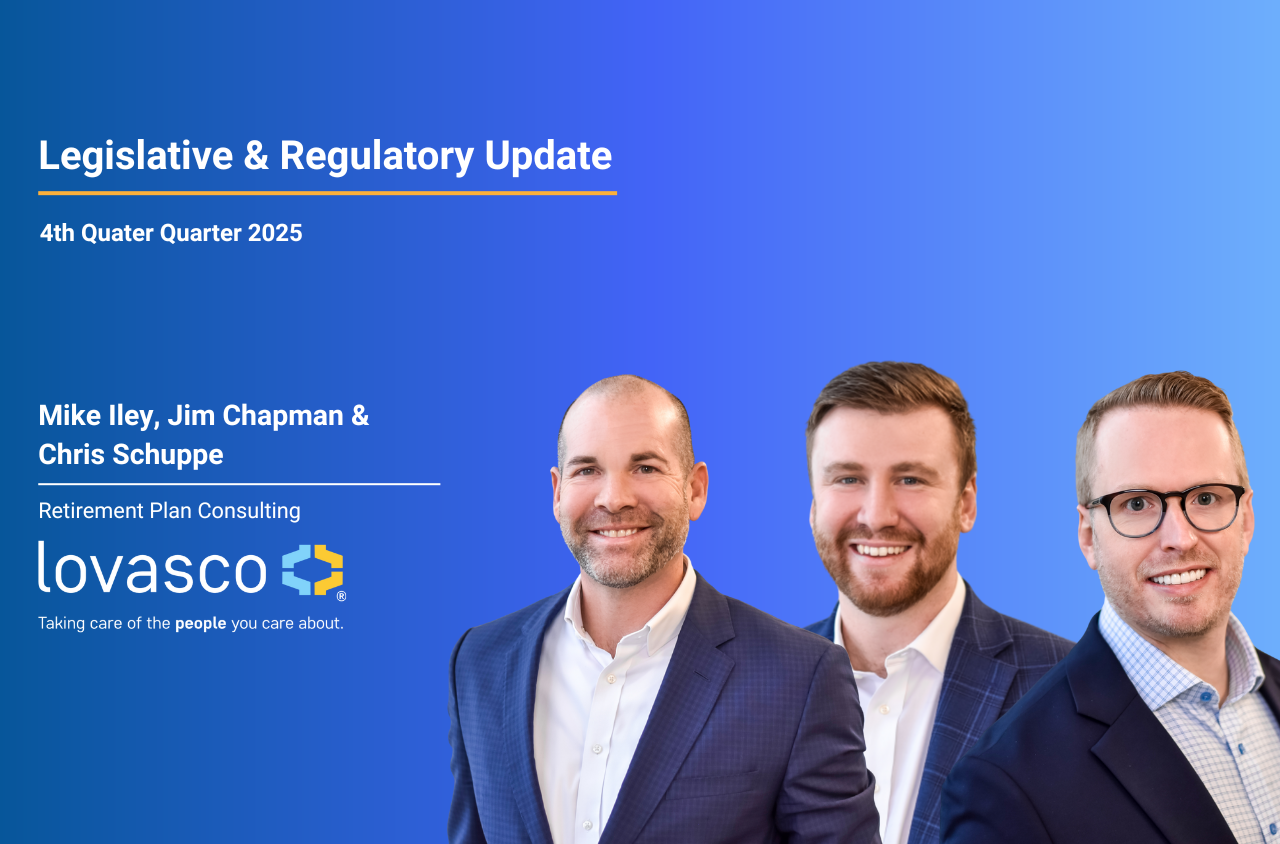
In LoVasco’s Q4 2025 Legislative Update, Retirement Plan Consultants Jim Chapman and Chris Schuppe join Mike Iley to walk through the most important regulatory changes and what employers should be doing now to stay compliant.
If you sponsor a retirement plan or serve on a plan committee, this update outlines the steps that can help protect both your participants and your fiduciary responsibilities.
Q4 2025 Legislative Update
Highlights and Takeaways
► 2026 contribution limits are increasing
For 2026, the standard employee deferral limit for 401(k) and 403(b) plans increased from $23,500 to $24,500. This applies to both pre-tax and Roth contributions combined.
Catch-up contributions for participants age 50+ also increased from $7,500 to $8,000. Additionally, the enhanced “super catch-up” for participants ages 60–63 remains in effect at $11,250.
The overall contribution limit (employee + employer) for 2026 is $72,000, not including catch-up contributions, and the compensation cap increased to $360,000.
► High-income earners must now make catch-up contributions as Roth
Beginning in 2026, participants who earned more than $150,000 in the prior year and are eligible for catch-up contributions must make those catch-up deferrals on a Roth basis.
For plan sponsors, this means:
- Your plan must offer a Roth contribution feature if you want to allow catch-up contributions for highly compensated employees.
- Payroll systems must be able to identify when participants exceed the standard deferral limit and automatically route catch-up contributions to Roth — or provide notifications so manual adjustments can be made.
This rule is one of the most operationally important Secure Act 2.0 changes for employers in 2026.
► Secure Act 2.0 requires plan document restatements by the end of 2026
While many Secure Act 2.0 provisions have already been implemented operationally, all required provisions must be formally reflected in plan documents by December 31, 2026.
Plan sponsors with pre-approved documents (most plans) will need to complete a full restatement, which consolidates all prior amendments and Secure Act 2.0 changes into one updated document.
Even if a plan has been operating correctly, failure to update the plan document can result in compliance violations and potential penalties. Most restatements will be driven by recordkeepers, but sponsors should confirm timelines and responsibilities early in 2026.
► A documented compliance calendar helps protect fiduciaries
Keeping up with required filings and participant notices is critical for ERISA compliance. Key annual tasks include:
- Distributing Summary of Material Modifications (SMM) if plan changes occurred
- Issuing 1099-Rs for plan distributions
- Completing census submissions for nondiscrimination testing
- Funding employer contributions and correcting excess deferrals
- Preparing Form 5500 filings and audits (if applicable)
A structured compliance calendar helps sponsors stay ahead of deadlines and reduces the risk of costly corrections.
► Fiduciary litigation remains a real risk
The recent UnitedHealth settlement (~$70M) highlights the importance of monitoring investment performance and avoiding conflicts of interest. The lawsuit centered on continued use of underperforming target-date funds tied to a corporate banking relationship, raising concerns about prudence and loyalty.
Best practices include:
- Maintaining a current Investment Policy Statement (IPS)
- Regularly reviewing investment performance
- Documenting committee decisions and rationale
Strong governance and documentation remain the first line of defense against fiduciary risk.
What Plan Sponsors Should Do Next
As 2026 approaches, sponsors should prioritize:
- Confirming payroll readiness for Roth catch-up requirements
- Coordinating with recordkeepers on Secure Act 2.0 restatement timelines
- Reviewing compliance calendars and governance processes
- Ensuring committee documentation is complete and current
Proactive planning now can help avoid compliance issues, penalties, and fiduciary exposure later.
▶️ Watch the full Q4 2025 Legislative Update to understand what actions your plan may need to take before year-end.

Is Your Retirement Plan Consultant Actually Doing Their Job?
Take the Self-Assessment to Find Out.
You're responsible for your company’s retirement plan. But with shifting regulations, mounting fiduciary risks, and growing employee expectations, how do you know if you have the right fiduciary oversight and financial wellness process in place?
It takes just 3 minutes
It’s completely free
Receive customized results instantly
Not sure where to start?
15 Questions to Score Your Organization's Benefit Program
See what you are missing.
Confirm where you shine.
Track progress over time.
Do your employees truly understand and value the generous benefits you offer?
Take the Employee Communications Assessment to Find Out.
Quickly benchmark your current employee communications efforts across clarity, education, employee engagement, and overall employee experience—so you can uncover gaps, identify opportunities, and build a happier, healthier workforce!
It takes just 2 minutes
It's completely free
Receive detailed Scorecard and customized assessment instantly

Subscribe to Our Insights Blog
Receive the latest articles from LoVasco's team of experienced experts on employee benefits and retirement plan best practices.

